
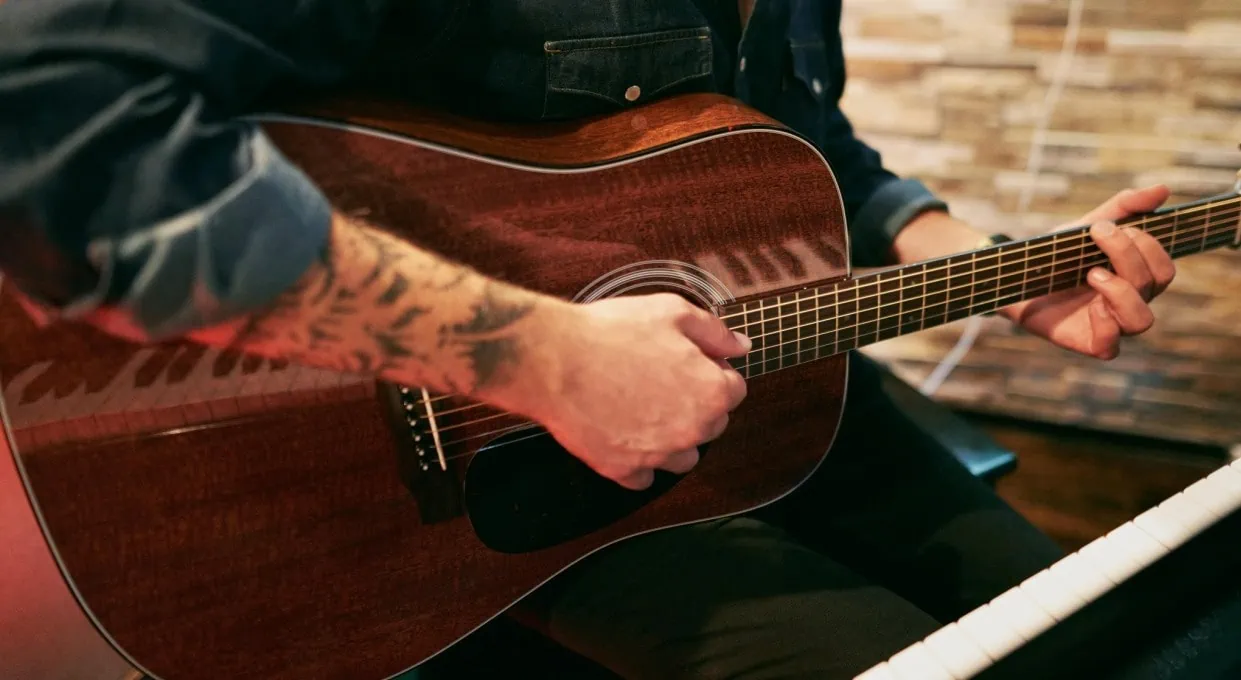
Martin is the oldest still operational guitar manufacturing company in the world. Yes, these folks have seen it all come and go numerous times. Moreover, they’re the creators of, perhaps, the world’s best-selling and best-known acoustic guitar shape: the dreadnought.
But the big news is that Martin has revived one of the classic, lesser-known models of its catalog for a celebration.
This is a post dedicated to finding out exactly what the deal is with this new-old addition to the Martin catalog and, more importantly, should you get one?
Table of Contents
Martin Turns 190!
Yes, Martin Guitars was founded by C.F. Martin in 1833 (yes, I know, a completely different world) and it has never stopped making great-quality instruments.
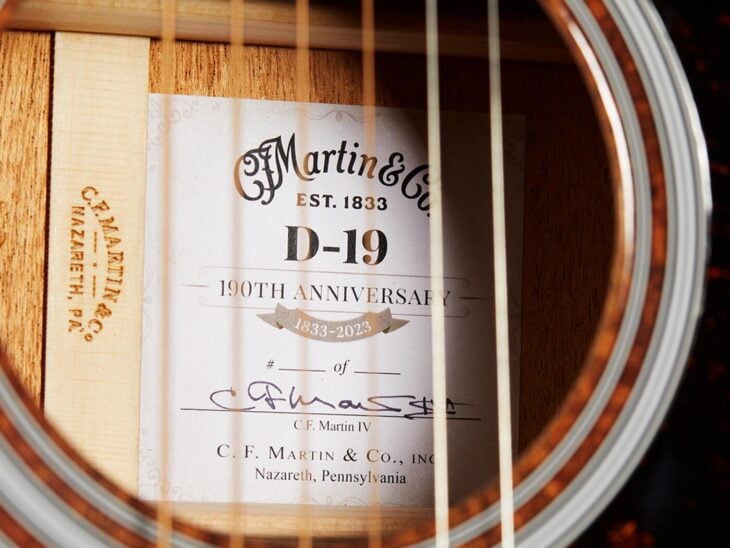
The year 2023 marked the 190th birthday of the brand and thus, C.F. Martin IV decided to do something special. Yes, I know the 200th anniversary is right around the corner, but it’s still ten years away. Who knows what will happen to the world until then?
So, in a fun video, the current CEO and chairman of the company went into the old catalog of the company and dug out a treasure, a discontinued guitar that needed to be brought back to life in celebration of this anniversary. That guitar was a forgotten classic from the ‘70s, the D-19.

Hunting a D-19 to Replicate
The first setback the company found when trying to bring the D-19 back to life was that they didn’t have one in stock. Yes, not even one prototype was left at the factory or the museum to replicate it. Thus, C.F. Martin IV did what we all do, he went hunting for one on the Internet.
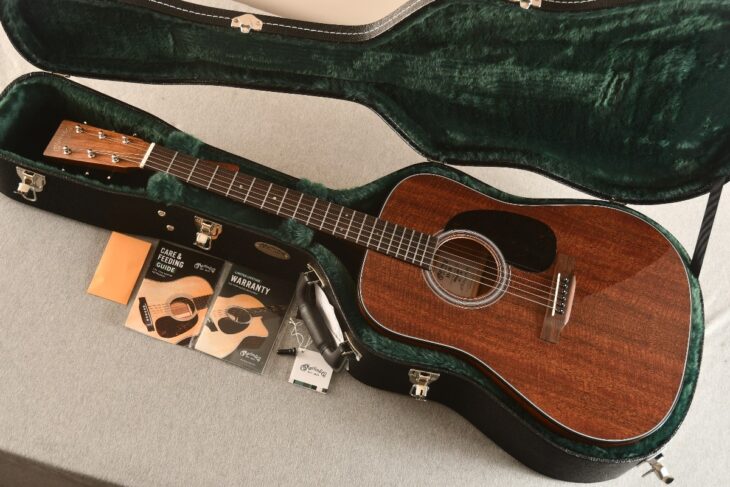
He found several models that weren’t selling at crazy prices and bought a couple of specimens to take the measurements from. I mean, a D-18 and a D-19 are equal in size, but the D-19 featured a mahogany-stained spruce top. That color on the soundboard made it look like an all-mahogany Martin but sounded like a spruce-top guitar.
Also, when it was made, between 1976 and 1988, it featured a D-28-style rosette and a D-21-style top purfling.
“Cosmetically Challenged Woods”
What C.F. Martin IV wanted to bring back from the D-19, more than just the guitar itself was the spirit and the idea. Yes, what the current CEO of Martin did was use modern technology to improve on the original D-19 concept.
What he did was use a new technology that has been used by companies like, for example, Epiphone for decades. This technology allows the company to transfer an image to the top of the guitar.
So, what Martin did was to take some pieces of super-rare curly and flame mahogany (yes, it exists in very limited numbers) and transfer that image to the top of the guitar.
But that’s not all the surprise, on the contrary, the biggest surprise is what’s underneath the printed mahogany image.
What is Adirondack Spruce?
Adirondack spruce is a far rarer and hard-to-get version of spruce that Martin usually only employs on Custom Shop models. Does this mean it’s better than Sitka spruce? Well, there are mixed opinions on the subject, but leaving the sound factor aside, it is harder to get, which makes it more expensive.
Also, trees don’t grow as big and it’s hard to find pieces that can work as the soundboard of a guitar. But Martin had some Adirondack tops lying around that were structurally and sound-wise impeccable but “cosmetically challenged”. Thus, this was the perfect situation to make something out of them and put out a limited run of 190 guitars with a custom-shop-worthy top at a regular guitar price.
Adirondack vs. Sitka
What makes Adirondack spruce super special? Well, there’s one quality that makes it stand out from the rest. I don’t know if you know this, but pre-WWII Martins are considered to be the holy grail of acoustics. Yes, these guitars can be compared to a ’59 Gibson Les Paul or a ’62 Fender Stratocaster.
Well, they came with an Adirondack spruce top.
What’s the difference between them? While Sitka is, by far, the most common type of spruce used in a guitar, Adirondack is a tad more dynamic and can be driven to a higher volume while remaining crystal clear. As you might know, that’s exactly what the soundboard or top of an acoustic guitar does, resonate to give volume to the notes.
Adirondack spruce can be played very hard giving back generous volume and also adding some dynamics to the playing. All of this can happen with a D-19 while the inner bracing (also made of Adirondack spruce) and mahogany back, sides, and neck add the low-end you need to make the guitar sound big. Well, Martin-size.
Finally, Bob Taylor, another master luthier of the modern era says that Adirondack spruce adds “an undeniable sweetness in every note, especially in the mids.”
How Does It Sound?
The big difference between this D-19 and a regular D-18 is that this is a very punchy, loud, clear-sounding guitar. I mean, don’t get me wrong, it doesn’t sound as clear or articulate as guitars with rosewood back and sides, but we’re talking an extra zero in the price tag.
That said, having an Adirondack top and braces is something you could only find in a Custom-Shop-level Martin. Therefore, when buying a D-19 what you get is a crystal-clear guitar with great note separation that sounds loud and proud with sweet mids, big lows, and a defined top-end.
Also, Adirondack tends to be more dynamic than Sitka spruce, therefore, you can expect this guitar to be more reactive to the attack of your picking hand. In other words, it will purr when fingerpicked and roar when played with a pick while retaining clarity, note separation, and the quintessential Martin tone all along.
The Bottom End
Martin will make only 190 of these guitars. While their price tag doesn’t place them among the more affordable instruments in the brand’s catalog, it’s a great opportunity to buy a historic guitar that will augment its price with time and that carries features of a Custom Shop guitar with a regular production line price tag.
Oh, and it comes inside the fancy green interior Martin case that always adds to the equation.
Happy (acoustic) playing!
