
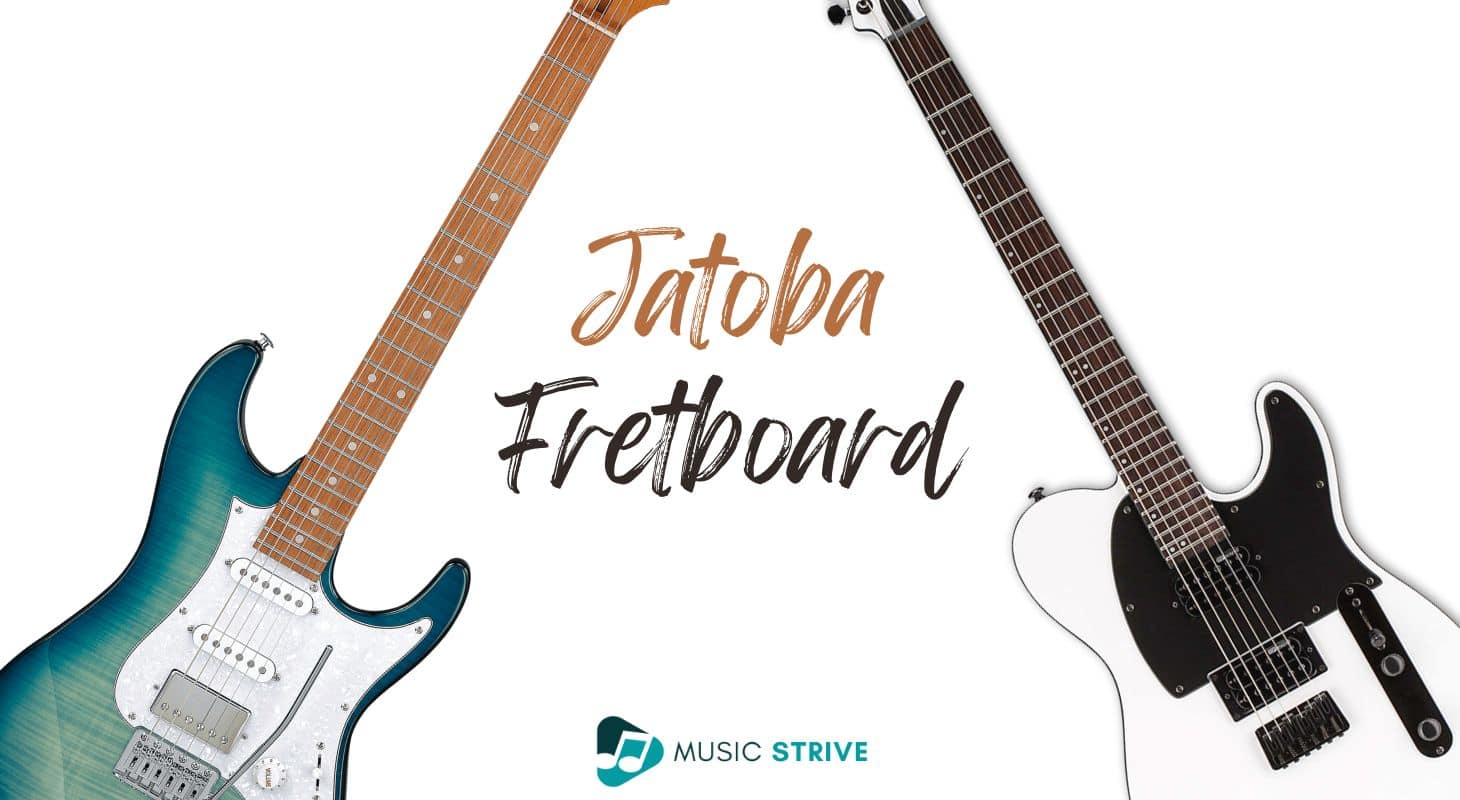
Like all guitar players, I spend more time than I should thinking about tonewoods.
I was browsing guitar forums recently and encountered a word I’d never seen before: “jatoba.”
Then I started seeing jatoba on guitars all over Sweetwater as I was procrastinating at work (don’t tell my boss).
What’s jatoba, and why am I suddenly seeing so much of it?
Introducing – Jatoba Wood
If you’re anything like me, you might not have heard much about jatoba before today.
Jatoba wood is a fretboard material that many may not have heard of, but that is quickly changing. It compares most similarly to rosewood, which is a good thing. Rosewood is getting close to becoming endangered, and regulations are becoming stricter to protect it.
Rosewood is my favorite material for fretboards. It’s on all my favorite guitars.
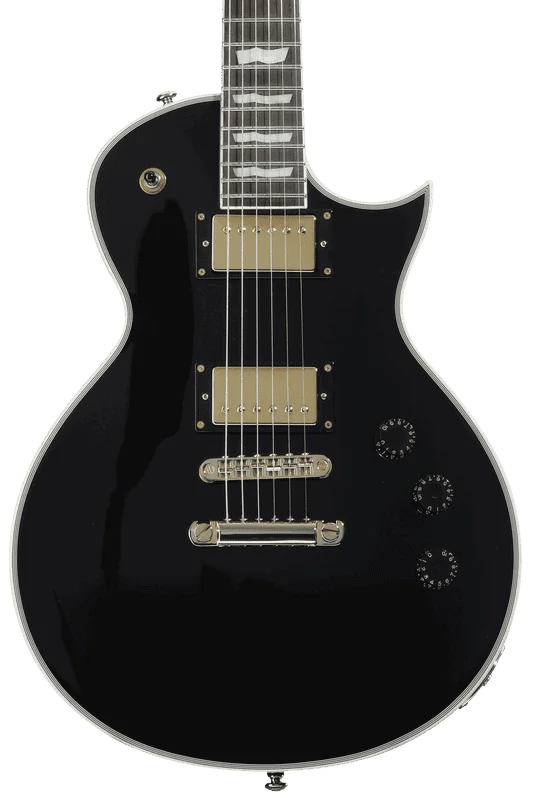
I headed down to my friend’s guitar store and asked about this unfamiliar rosewood alternative. Luckily for me, he had a jatoba-equipped ESP Eclipse in stock, and I got to play with this exotic new fretboard wood.
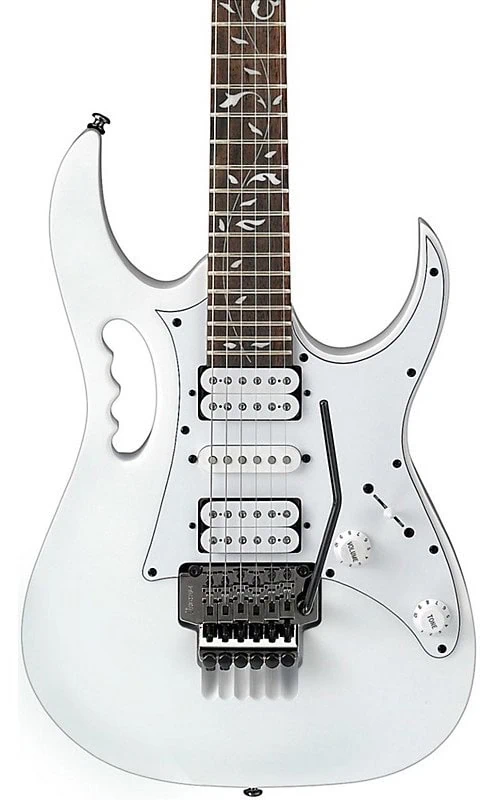
Top 3 - Popular Jatoba Guitars
Preview | Product | Price |
|---|---|---|
 | ||
 | ||
 |
He told me that, once treated and ready for a guitar, jatoba has a dark brown appearance with hints of red to it. Its hardwood nature means jatoba is generally left unfinished, like rosewood, and unlike maple, which has a clear protective coating.
Since it is a relatively dry wood, this means it will require a little extra maintenance to keep it from drying out too much. Jatoba is a relatively strong wood, however, so just a little care can go a long way. I use lemon oil on my rosewood fretboards, and jatoba responds well to the same care.
I found that, in the tone department, jatoba leans to the warmer side, with a little sharpness in the mid-range. The extra mid-range makes it a prime candidate for overdriven and high gain sounds. Solo work will especially benefit from this to cut right to the front of a mix.
Rosewood vs Jatoba
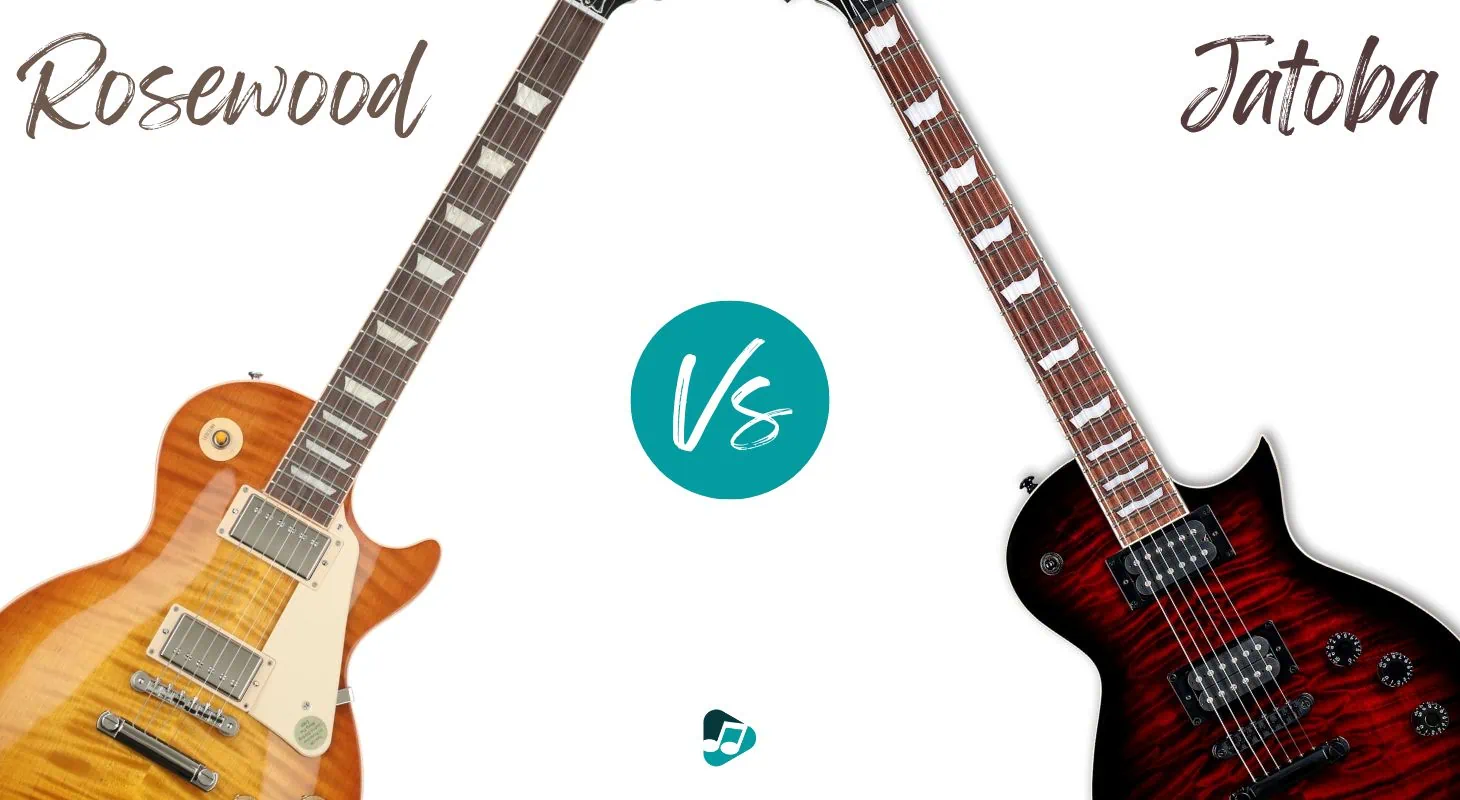
The Jatoba-equipped guitar in the image above is the ESP LTD Eclipse EC-256QM.
As you might guess, these two are pretty similar. In looks and in tone they share a lot of the same properties. The differences are subtle and you may have to look close to find them.
Rosewood, while also a warmer sounding wood, lacks the midrange character of jatoba. It makes up for this in a different way with a slightly fuller bottom end. I found that jatoba had a more aggressive mid-forward tone than rosewood.
There’s less upkeep with rosewood, as it’s naturally more oily and less porous. Jatoba doesn’t look as smooth or glossy as rosewood, either, when I compared them side-by-side.
Rosewood, because it’s scarcer, has a moderately higher cost than jatoba.
Because of this, I see jatoba on lower-priced guitars, particularly those from Japanese builders like Ibanez and ESP/LTD.
Expect to find jatoba in place of rosewood on a lot more entry-level to mid-range priced guitars in the near future.
Maple vs Jatoba
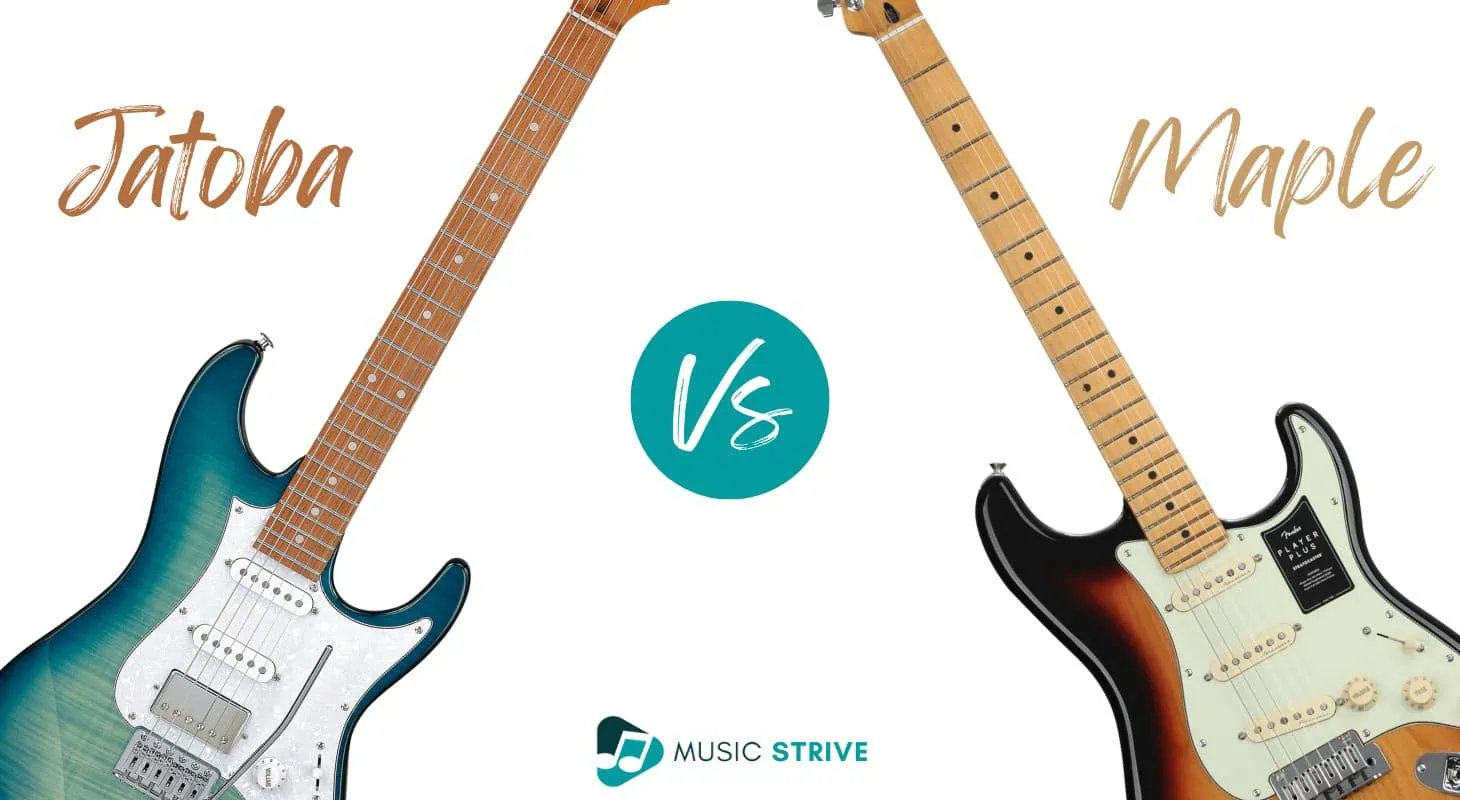
The Jatoba-equipped guitar in the image above is the Ibanez Standard AZ22S1F.
Here we have the opposite end of the spectrum. Maple and jatoba are very different in appearance and sound. When it comes to a choice between the two, personal taste is going to play a huge role.
Maple fretboards feel completely different from jatoba. The slick, classic Fender maple board feeling is a world away from the drier, porous feel of jatoba under my fingers.
We already know a bit about how jatoba sounds, and maple is about as far from jatoba and rosewood as you can get!
I find that maple has a brighter, sharper tone, with a sparkling high end that can really shine with clean tones. It’s not without a decent midrange, but it’s not aggressive like that of jatobas.
To my eyes, maple has a very light-colored and smooth appearance. It’s much softer than jatoba, and even more so than rosewood. Because of this, maple always has a clear finish over it to protect it. The benefit here is that there’s almost no upkeep, just keep it clean and you’re good to go.
When it comes to cost, there are a lot of factors that can drive up the price of maple. Flame, birdseye, or quilting will make it a more expensive option. The particular species of maple can also affect the price, but generally, plain maple will be similarly priced to jatoba.
Other Uses of Jatoba Guitar Wood
Most of the jatoba I’m seeing is in place of rosewood fingerboards.
I personally still prefer rosewood, but that might just be what I’m used to. I’ve spoken to plenty of guitarists who feel it’s actually an improvement over rosewood, particularly when it comes to sustainability and affordability. What about the rest of the guitar?
Generally, the body of the guitar is probably not a place you’ll find jatoba. With the exception of some custom shops, rosewood has never been a popular choice for the body itself.
There have recently been a few bass guitars to offer jatoba as part of their neck material. When playing these, I noticed a pronounced midrange growl, perfect for heavier styles. I’m particular impressed by the Ibanez SR605E bass.
So, Is Jatoba Actually Any Good?
The age-old question: “is such-and-such good for my guitar?” Well, the only one who can really answer that is you! If you’re looking for a rosewood alternative that’s a little more aggressive, I’d say you’re heading in the right direction.
Likewise, if you’re an intermediate player (or an advanced player looking for an affordable instrument as a gigging backup) it’s hard to argue against jatoba’s price point.
The extra midrange is what’s really appealing to many, especially those of us who want to rock the house. Jatoba is really going to sing with distortion, and it doesn’t matter if it’s a light crunch or a chunky metal rhythm sound.
For lead work, that midrange may even become a necessity in time. In my opinion, Jatoba has a real chance to become the next “holy grail” that guitarists are after. Its durability and cost-effectiveness are simply added bonuses to the killer sounds it can offer.
It remains to be seen over the coming years whether jatoba fretboards will withstand years of hard gigging. At the moment, however, I’m finding this hardwood to hold up nicely, even compared to the tried-and-tested rosewood boards of my favorite guitars.
Where Can You Get Your Hands on a Jatoba Fretboard?
Several well-known companies are now using jatoba for fretboard material. I’m particularly fond of ESP’s jatoba-infused Eclipse, but their Japanese brethren at Ibanez are really leading the pack with jatoba in their AZ line. The Ibanez AZ series is built for high-gain shredding, and jatoba complements that perfectly.
I’m also really liking jatoba’s foray into acoustic guitars, like those on offer at ESP LTD. The TL6QM looks even better in person, and the jatoba bridge adds a lovely, woody resonance.
What to Expect Going Forward
In the future, it’s likely we’ll see more and more brands offering jatoba fretboards. With rosewood being more regulated (and even more costly as a result), many brands already have these available on their low to mid-price range instruments.
It wouldn’t be surprising to get to a point where rosewood is only offered on top models, with the price tag to match. This is already starting to occur at Gibson and Epiphone, where rosewood was the de facto fretboard material for decades.
Jatoba might become the intermediate guitar player’s rosewood for the next generations.
The question is, do you want to stay traditional with the same old sound we all know and love? Or do you want to crank it up a notch with something a little different?
Ultimately, the choice is yours. At the end of the day, if it feels and sounds good, it is good. I always advise my students to follow their ears. Find what best suits you, your music, and your playing style, and you can’t go wrong.

No. It all adds up on a bass or electric guitar. The way you know for sure is. What if you had a metal fret board? You’d definitely hear a sound difference. So these different fret board materials whether synthetic or natural woods would make a difference .
Guys. What have we come to? Guitarist dissing each other. WE KNOW WE ALL STICK TOGETHER. LETS JAM!
To anyone that thinks the fret-board doesn’t make a difference. You have bad ears. Eddie Van Halen didn’t like Rosewood and Steve Via Loves it. Amps with 6V6 tubes sound different than amps with EL34. Floating bridges sound different than Hard Tails. You should research what expensive Martins, Taylors, etc. us to make a solid wood guitar. EVERYTHING matters on a guitar.
What “care” is needed to keep Jatoba fingerboards in good shape? Will lemon oil do the trick like rosewood or is there another type oil needed?
Thanks, Steve
Hi Steve, Tracy here. I have an Ibanez AR520H and I’ve found that a generous coat of orange oil on the fretboard keeps it in very good shape. Load it up, then wipe off the excess and let it set for an hour to soak in. I use orange oil on all “porous” fretboards: rosewood, ebony, and jatoba. Good luck!
Great Article and comment. I agree with what you hit on, if you are not opposed I would like to possibly use a quote or 2 on my site. I use Jatoba for fret boards quite often these days and I prepare and sell some blanks as well. I could not have said it any better than you have. Let me know if that would be acceptable. Thanks for your time.
BCH Guitars
Sure, Brian!
Finger boards do not have a tone. The strings make the tone. The fingerboard has a feel and a response to the strings tone, but the fingerboard does not make a sound.
Grant, you are a funny man… well, we can all say that your hands does not make a sound either. Neither tubes, or cabinets, not even the strings, as you say. Just the speaker, but is not even the speaker. Sound is basically the movement of air between the speaker and your eardrums. And if we go one notch further, is your brain that interprets the electrical impulses from your ear. Technically sounds does not exists, is all made up by the brain and limited by the ear’s frequency response.
PS: I can be a smart ass like you if I want to or even worst. Obviously the article refers to the harmonic difference between different woods. But I think you did not get that either.
Bone-Nut got a different tones as a plastic-Nut. The Frets are holding from the Wood. It makes a difference.
I have to agree. Any difference people hear is placebo. It’s right up there with “tone woods” on electric guitar bodies. If there IS a difference, it’s so minute it wouldn’t be perceivable… probably. Does not matter unless we’re talking acoustics.