

J-Rock started with the British Invasion back in the ‘60s but, after decades of meteoric ascend, it has become a huge part of world culture. Indeed, in the past decade, Japanese bands have sold out prestigious venues such as the Madison Square Garden.
But, do you know what sets the J-Rock tone apart?
I have been chasing that specific tone for some time now and I think I came very close. Although it is a very broad genre, I’ll do my best to help you nail that tone and keep the people in the room headbanging all night long.
One Name, Many Genres
J-Rock is the label most people use to name bands that are very different. On one side of the spectrum, you have heavy (really heavy) metal bands such as BABYMETAL, GazzettE, and Aldious. These are visual-heavy, very distorted acts that are not for the faint of heart.
On the other side of the spectrum, you have alternative groups like Supercar (my favorites) and established legends like X Japan, L’Arc-en-Ciel, and B’z. These bands’ sound is much closer to a clean – overdrive – distortion dynamics than the metal side.
Despite their difference, there’s one common aspect that, in my opinion, is present in every J-Rock band: clarity. Yes, guitars sound punchy but have an almost vocal-like clarity that sets the entire genre apart.
I’ll cover examples on both sides so you can start playing J-Rock right now.
J-Rock Guitars
The metal side of Japanese Rock is dominated by ESP guitars. That said, like most things out of the Japanese scene, the guitars these stars rock on stage are custom-made for them or unobtainable outside Japan.
Nevertheless, for the thick, heavy metal tones of BABYMETAl, you have many choices of 7-string guitars from 3-digit price tags like the ESP LTD EC-257 or the ESP LTD SH-207 FM to the affordable ESP E-II Horizon FR-7 and ESP USA M-7 HT. You really need that 7th string to give that extra crushing power to the evil riffs.

For the GazettE and Aldious tones, you can go for 6-string versions of the guitars above.
Alternative rock, on the other hand, is dominated by more traditional guitar brands such as Fender and Gibson. In the case of Fender, the Japanese subsidiary of the brand usually releases Japanese-exclusive models not found anywhere else on the planet.
So, for those tones, Stratocasters, Telecasters (especially with humbuckers), Jazzmasters, Mustangs, Les Pauls, and SGs are the way to go.
Some great options are the American Professional II Stratocaster, the Classic Vibe ’70s Stratocaster, the American Professional II Telecaster Deluxe, and the single-coil version (as well as the Squier version of both). Also, the truly alternative offset guitars such as the American Professional II Jazzmaster (and its Squier version), and the American Performer Mustang as well as the Squier version).

On the Gibson side, Gibson and Epiphone Les Paul as well as the SG version of both brands will give you the punch you need and the clean tone you want.
What’s important on the alternative side of J-Rock is that the guitar’s pickups aren’t super-hot so it won’t go into muddy territory. On the contrary, you have to keep the tone punchy but clear. To achieve that, in my opinion, the HSS configuration on the Strat or a dual-humbucker, alder body Telecaster will do the job.
The tone of bands like B’Z and X Japan require a little more mahogany-like darkness and the Les Paul might suit the bill better for that.
J-Rock Amplifiers
On the heavy metal side of the spectrum, it’s all about thick, modern, expensive-sounding tones. For that, just like BABYMETAL’s Mikio Fujioka plays, a Kemper (or the new pedal version) or any other modeling amp is the way to go. Other than that, brands like Bogner or Diezel will do the job.
For a more modest budget, an IK Multimedia TONEX or a Blackstar HT20RH MKII will do the job. What you need is thick, modern (not scooped) distortion.
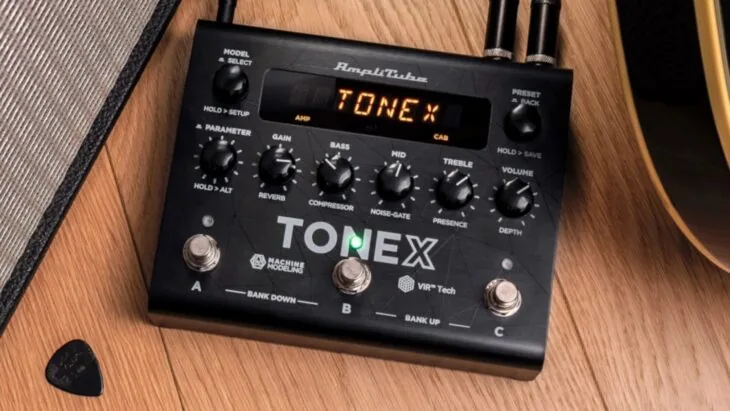
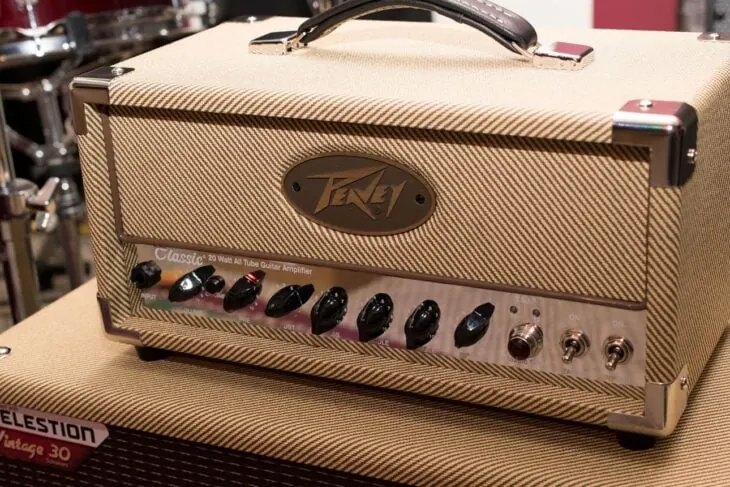
For the alternative side, things get a little different, and although you can do it all with a Kemper or a TONEX, you need some shimmering cleans to go with the overdrive and the alder body of your new guitar. In that sense, the Fender Super-Sonic 22 packs everything you need in a portable amp. The Peavey Classic 20 is another great option with a more affordable price tag.
Dialing the Tone
To dial in the J-Rock tone, you need to have a guitar sound that can cut through the mix with lots of punch and clarity. For that, what you need is some high-end and also a moderate amount of midrange. As you might know, the midrange is where the overdrive and the distortion live.
So, to go after the heavy metal J-Rock sound, I would say:
- Volume – 6/8
- Gain – 7/10
- Treble – 9
- Middle – 4
- Bass – 10
- Presence – 6
Notice how the midrange is taken out of the equation partially but not scooped. You have to crank the bass to get that heavy chugging sound and the high-end will give you the clarity you need for the signature J-Rock heavy sound.
If you happen to have a compressor and a noise gate to put in front of the amplifier, you’ll be much closer still to the heavy sound of bands like BABYMETAL. Pedals like the Boss CS-3 and the NS-2 will do the job.

For the alternative rock side of J-Rock, I would say you have to keep the gain down and bring up the midrange a bit.
- Volume – 6/8
- Gain – 4/6
- Treble – 9
- Middle – 6
- Bass – 8
- Presence – 7
At first, it might seem like there’s too much high-end on your sound but as soon as you mix it with other instruments, you’ll get the shimmer and get rid of the shrillness.
The Bottom End
J-Rock is a huge genre that includes many bands and subgenres and they’re all worthy of your attention as a music lover. Use the gear and advice above to get that clear, punchy, shimmery sound and play your Japanese favorites.
Happy (ハッピー) playing!

I am trying to get the tone from a song of a band called yorushika. the song name is ‘tada kimi ni hare’ and is one of my favourites. I’m new to the electric guitar world and the tones kinda overwhelm me so can someone write the tone specifics for that song? it’ll be really appreciated.
Hey! A tad late but maybe you’re still after that tone.
Quite simple, to get a “Yorushika” tone, I would heavily recommend using a Telecaster (especially vintage-style) as it is their guitarist’s main guitar! For the effects, just put a CS-3 with a non-TS overdrive and it should absolutely do the job.
here is his very own youtube channel so you can check everything gear related he uses! Wish that helps
https://www.youtube.com/@simomts/videos